
The aroma of simmering broth and marinated beef wafts through my kitchen, instantly transporting me to a bustling Korean street market. Today, I’m excited to share my Quick and Hearty Korean Beef Bulgogi Stew with Glass Noodles. This dish isn’t just about flavors; it’s a cozy embrace in a bowl, ready to rescue you from those fast food cravings with its wholesome goodness. In under 30 minutes, you can whip up this comforting meal, turning leftover beef bulgogi into a delightful one-pot delight. The sweet potato glass noodles offer an inviting chewiness, while the tender beef melts in your mouth, making it a perfect choice for busy weeknights or leisurely weekends alike. Ready to warm your soul with a bowl of this delectable stew? Let’s dive in!
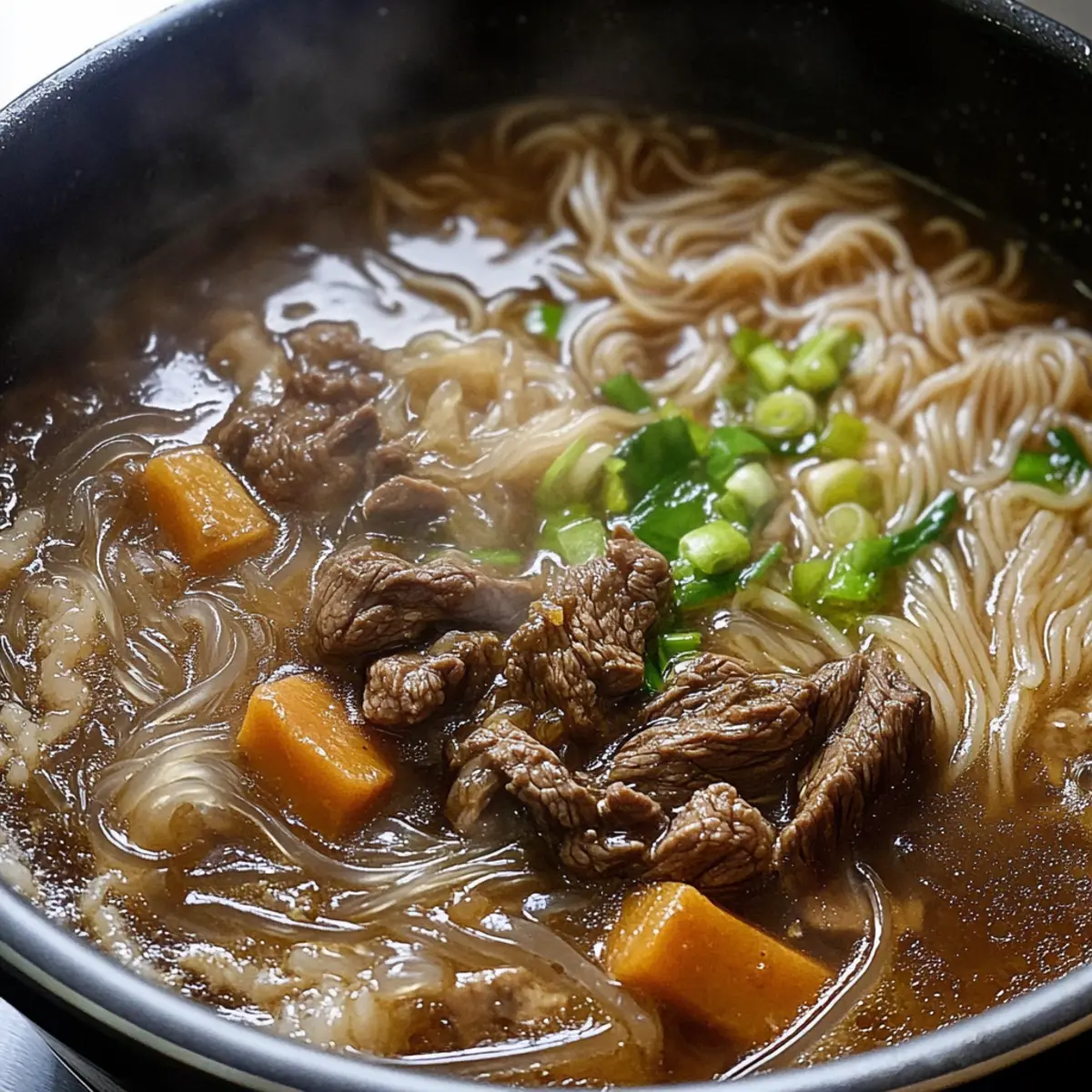
Why is Korean Beef Bulgogi Stew Amazing?
Comforting Flavor: This stew combines the rich flavors of marinated beef bulgogi with a savory broth, creating an irresistible dish that warms the soul.
Quick Preparation: You can have this dish ready in under 30 minutes, making it perfect for busy weeknights when you crave homemade goodness without the long wait.
Versatile Ingredients: Substitute different proteins or add seasonal vegetables to suit your taste and pantry offerings, much like my Teriyaki Ground Beef or a Cheesy Beef Potato dish.
Healthy Comfort Food: Packed with nutrients from the sweet potato glass noodles and plenty of fresh vegetables, this stew satisfies while keeping health-conscious eaters happy.
Crowd-Pleasing Delicacy: Impress family and friends with this delightful dish, perfect for gatherings or a cozy night in!
Korean Beef Bulgogi Stew Ingredients
For the Stew
• Beef Bulgogi – Adds a rich, sweet-savory depth to the stew; can use freshly marinated beef if leftovers aren’t available.
• Sweet Potato Glass Noodles (Dangmyeon) – Provide a chewy texture that absorbs the broth well, ensuring they remain firm during cooking; rice noodles or udon can work as substitutes.
• Enoki Mushrooms – Add a tender-crisp texture and subtle earthiness; feel free to replace with shiitake or button mushrooms for varied flavors.
• Green Onion – Introduces brightness and a mild onion flavor; ideal for garnishing to enhance presentation.
• Water/Beef Broth – Forms the base of the stew; substitute with beef broth for richer flavor.
• Sesame Oil – Brings a nutty aroma and depth of flavor; while there’s no direct substitute, a light oil can be used in a pinch.
• Dark Soy Sauce – Elevates the umami flavor and color of the broth; regular soy sauce can work, but the taste will differ slightly.
For Serving
• Steamed Rice – Great to serve alongside the stew, perfect for soaking up every drop of the flavorful broth.
• Traditional Banchan (Kimchi or Pickled Radishes) – Complements the stew beautifully, adding an authentic touch to your meal.
This Korean Beef Bulgogi Stew is all about blending rich, soulful flavors into a dish that’s quick and comforting, just right for any occasion!
Step‑by‑Step Instructions for Korean Beef Bulgogi Stew
Step 1: Soak Noodles
Start by submerging the sweet potato glass noodles in warm water, ensuring they are fully immersed. Allow them to soak for about 15 minutes until they become pliable and soft. This step is essential for achieving the perfect chewy texture in your Korean Beef Bulgogi Stew, so keep an eye on them as they soften.
Step 2: Heat Bulgogi
In a medium-sized pot, set over medium heat, warm your leftover beef bulgogi for about 3-5 minutes. Stir frequently until the beef is heated through and begins to toast slightly, releasing its savory aroma. This process enhances the flavors of the bulgogi and prepares it as the flavorful base for your stew.
Step 3: Combine Ingredients
With the beef bulgogi heated, stir in the dark soy sauce and sesame oil until thoroughly mixed. This usually takes about 1-2 minutes. The rich colors of the sauce should coat the beef beautifully, creating an inviting and aromatic blend that will form the backbone of your Korean Beef Bulgogi Stew.
Step 4: Add Liquid
Pour 4 cups of water or beef broth into the pot and increase the heat to bring the mixture to a boil. This should take around 5-7 minutes. As the liquid comes to a rolling boil, you will notice the deepening aroma, signaling that the flavorful broth is developing beautifully.
Step 5: Incorporate Noodles & Toppings
Once boiling, gently add the soaked glass noodles and enoki mushrooms to the pot. Cook them together for 2-3 minutes, stirring occasionally, until the noodles are tender yet firm to the bite. Keep watch for the noodles to absorb the broth’s richness while the mushrooms provide their tender-crisp texture to the stew.
Step 6: Serve
Ladle your Korean Beef Bulgogi Stew into bowls, topping it generously with freshly chopped green onions for an added layer of flavor and a pop of color. Serve immediately, ideally alongside a bowl of steamed rice or traditional banchan, allowing everyone to enjoy this comforting and hearty meal that highlights the beauty of Korean cuisine.
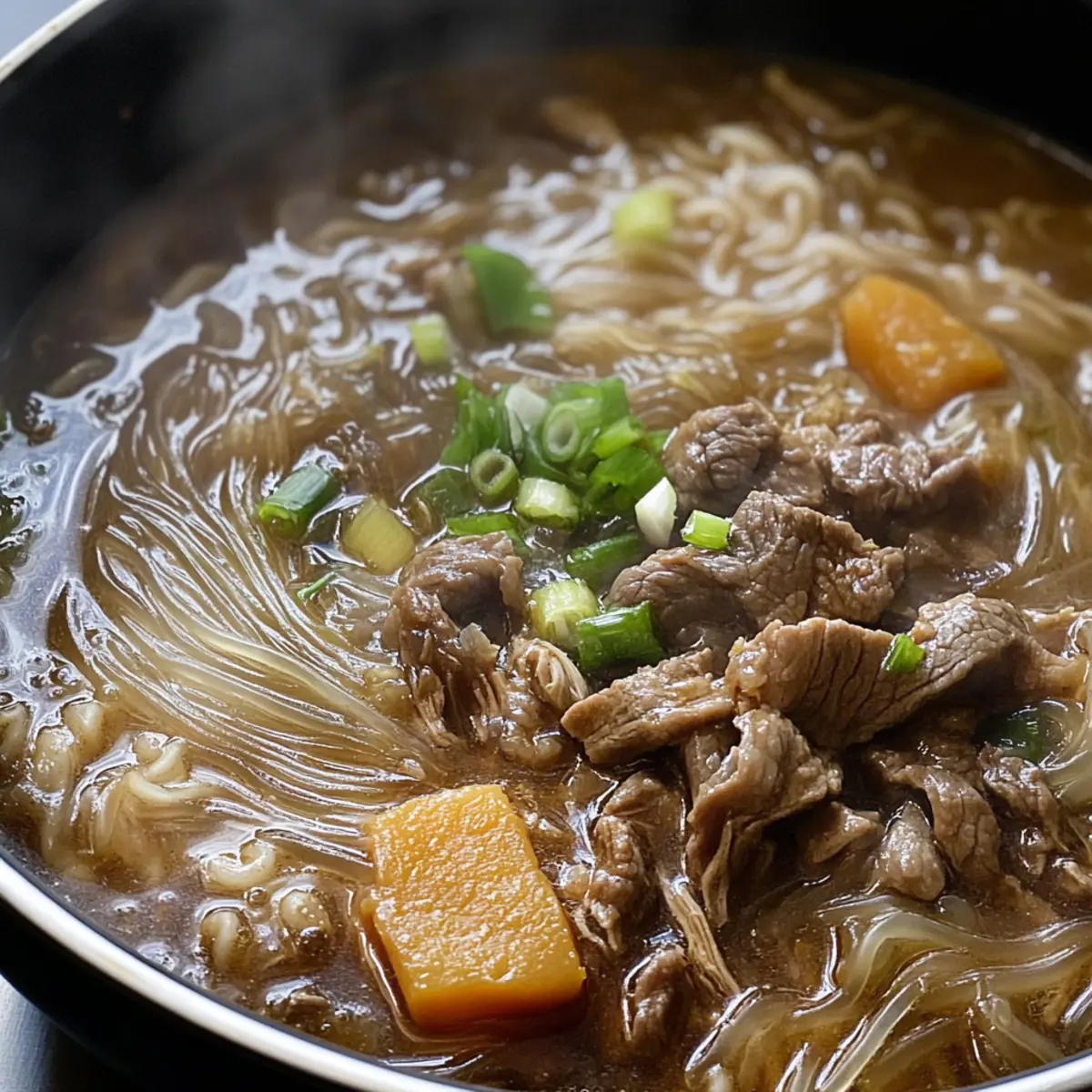
Make Ahead Options
These Korean Beef Bulgogi Stew components are perfect for meal prep enthusiasts! You can prepare the beef bulgogi up to 24 hours in advance by marinating and cooking it, allowing the flavors to deepen. Store it in an airtight container in the refrigerator. The sweet potato glass noodles can also be soaked ahead and kept in a sealed bag, remaining fresh for up to 3 days. When you’re ready to enjoy your stew, simply reheat the bulgogi in a pot, add water or broth to create the stew base, then incorporate the noodles and enoki mushrooms. This method ensures your Korean Beef Bulgogi Stew is just as delicious and comforting with minimal effort on busy weeknights!
Expert Tips for Korean Beef Bulgogi Stew
• Noodle Soaking Time: Ensure you soak the sweet potato glass noodles long enough—approximately 15 minutes—until they’re pliable to achieve the best texture in your stew.
• Adjusting Broth Consistency: Depending on your preference, feel free to modify the broth-to-noodle ratio for a more soupy or thicker Korean Beef Bulgogi Stew—just remember to adjust cooking times accordingly.
• Flavor Enhancement: For a richer and deeper flavor, let your assembled stew simmer for an additional 5-10 minutes after boiling—this allows all the ingredients to meld beautifully.
• Vegetable Boost: Incorporate seasonal veggies like bok choy or napa cabbage for added nutrition and crunch—this not only enhances your stew but gives it vibrant colors and textures.
• Mushroom Variety: Experiment with different mushroom types such as shiitake or button mushrooms based on your preference; each variety provides a unique flavor profile to your Korean Beef Bulgogi Stew!
How to Store and Freeze Korean Beef Bulgogi Stew
Fridge: Store leftover Korean Beef Bulgogi Stew in an airtight container for up to 3 days. Make sure to let it cool down before sealing to maintain freshness.
Freezer: For longer storage, freeze the stew in a freezer-safe container for up to 2 months. Allow to cool completely, then portion into individual servings if desired.
Reheating: To reheat, thaw overnight in the fridge if frozen, then gently warm on the stovetop, adding a splash of water for moisture if the stew thickens.
Avoid Overcooking: When reheating, maintain a medium-low heat and stir occasionally to prevent scorching, ensuring every bite of your hearty stew remains delicious!
What to Serve with Quick and Hearty Korean Beef Bulgogi Stew?
To create a delightful dining experience, consider pairing your stew with these complementary dishes and beverages.
-
Steamed Rice:
The fluffy, comforting rice soaks up the savory broth perfectly, balancing the richness of the stew. -
Kimchi:
This traditional Korean side dish adds a tangy crunch, enhancing each spoonful of your stew with its fermented flavor. -
Pickled Radishes:
Bright and crunchy, these bring a refreshing contrast that cuts through the heartiness of the beef bulgogi stew. -
Crispy Asian Egg Rolls:
Their crispy texture and savory fillings make a fantastic contrast to the tender noodles and beef in the stew. -
Green Bean Stir-Fry:
Stir-fried with garlic and sesame oil, the vibrant crunch of green beans complements the deeper flavors of the stew, adding color and nutrition. -
Banchan Variety:
A collection of traditional Korean banchan, such as seasoned spinach or tofu salad, provides a flavorful and colorful accompaniment, enhancing the meal. -
Sweet Korean Desserts (e.g., Bingsu):
A chilled, sweet treat like bingsu offers a delightful finish to the meal, refreshing your palate after the savory stew. -
Jasmine Green Tea:
This fragrant tea helps cleanse your palate between bites, creating a calming experience that beautifully pairs with Korean flavors.
Korean Beef Bulgogi Stew Variations
Get ready to make this recipe your own with delightful twists and substitutions!
-
Chicken or Tofu: Swap beef bulgogi for chicken bulgogi or cubed tofu for a lighter dish. Both options add a unique take on the classic flavors.
-
Veggie Boost: Add a handful of spinach, bok choy, or sliced carrots. These not only enhance the color but also add nutrition and texture.
-
Noodle Alternative: Use rice noodles or udon if you can’t find sweet potato glass noodles. Each type offers a different chew and experience.
-
Mushroom Medley: Replace enoki mushrooms with shiitake or cremini mushrooms for a richer flavor profile. They bring their own unique textures and tastes to the stew.
-
Spicy Kick: Sprinkle in some red pepper flakes or sliced chili peppers for a delightful heat. This little addition can ignite the flavor fireworks in your bowl!
-
Herb Infusion: Experiment with fresh herbs like cilantro or Thai basil for a fresher taste. They’ll infuse your stew with fragrant notes that elevate each bite.
-
Flavor Layering: Instead of dark soy sauce, try adding some gochujang (Korean chili paste) for a spicy and sweet twist. It’s a wonderful way to embrace authentic Korean flavors.
-
Classic Pairings: Serve alongside steaming bowls of rice or traditional banchan like kimchi for that perfect, soul-satisfying meal. Your guests will love the array of choices!
With these variations, you can easily create new favorites within this comforting stew, enhancing your home-cooked experience even further!
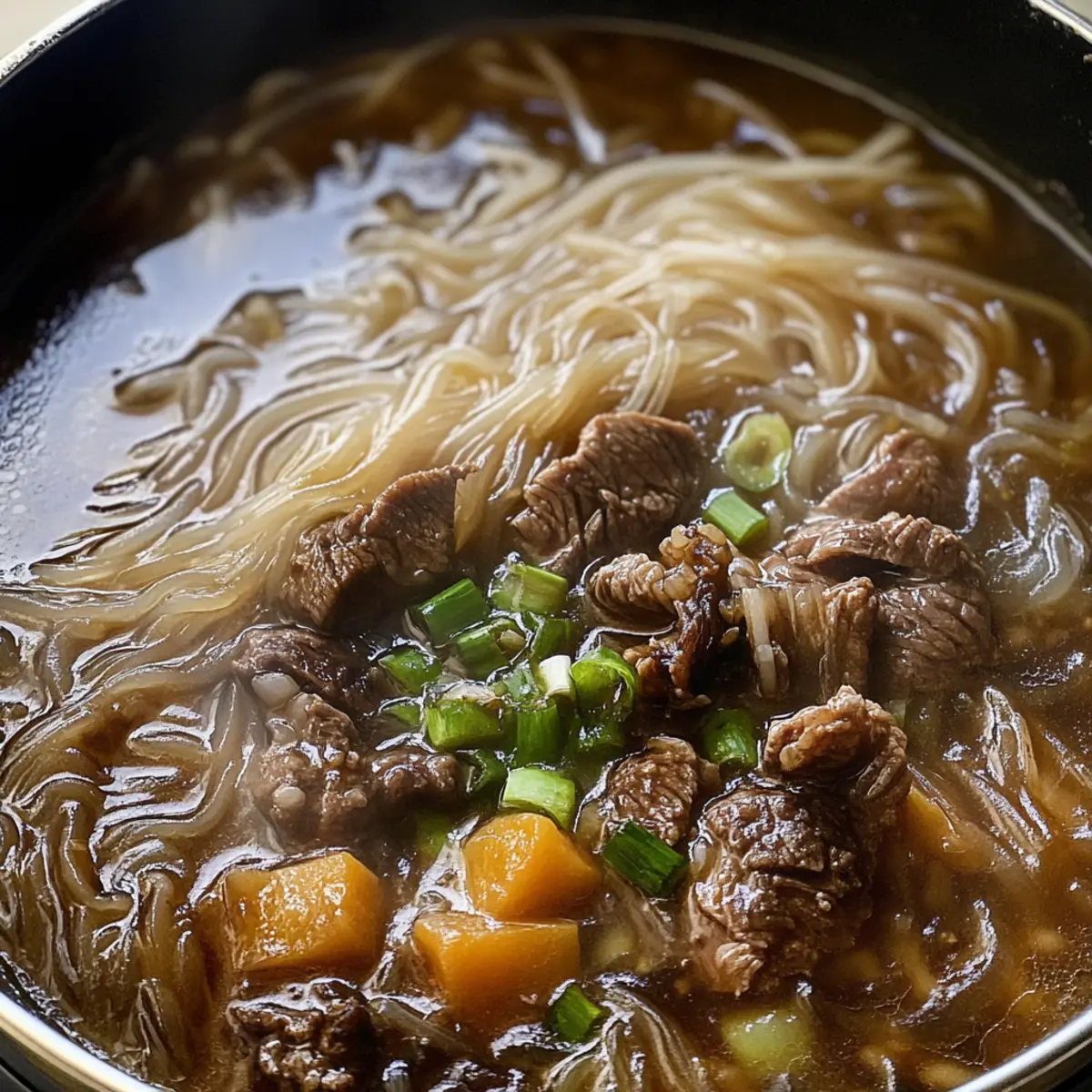
Korean Beef Bulgogi Stew Recipe FAQs
What type of beef should I use for Korean Beef Bulgogi Stew?
Absolutely! You can use leftover beef bulgogi for an easy meal. If you don’t have leftovers, freshly marinated beef, typically sirloin or ribeye, works wonderfully too. Look for cuts that are tender and marbled for the best flavor and texture in your stew.
How should I store leftover Korean Beef Bulgogi Stew?
Store your leftover Korean Beef Bulgogi Stew in an airtight container for up to 3 days in the refrigerator. It’s best to let the stew cool for about 30 minutes before sealing to preserve freshness. When ready to eat, simply reheat it gently on the stovetop, adding a bit of water if it thickens too much.
Can I freeze Korean Beef Bulgogi Stew?
Certainly! To freeze, allow the stew to cool completely. Then, pour it into a freezer-safe container, leaving some space at the top for expansion. Your stew can be frozen for up to 2 months. When you’re ready to enjoy it again, thaw it overnight in the fridge and reheat it on medium-low heat, stirring occasionally.
What if the glass noodles become mushy?
Very importantly, to avoid mushy noodles, soak them only until they are just pliable, around 15 minutes, before adding them to the boiling broth. Additionally, make sure to add them last and limit their cooking time to just 2-3 minutes, ensuring they remain firm and chewy.
Are there any dietary considerations when making Korean Beef Bulgogi Stew?
For sure! If you’re cooking for someone with allergies, be mindful of soy and sesame, as the soy sauce and sesame oil are key ingredients. You can substitute tamari for gluten-free options or skip the oil if necessary, although the flavor will differ. If cooking for pets, this stew isn’t recommended due to the seasoning and ingredients used.
How can I enhance the flavor of Korean Beef Bulgogi Stew?
To deepen the flavor of your stew, I suggest allowing it to simmer on low heat for an extra 5-10 minutes after boiling. This extra time lets all the ingredients meld beautifully and enhance the overall taste. Adding vegetables like bok choy, carrots, or napa cabbage not only boosts nutrition but also contributes to a richer flavor profile!
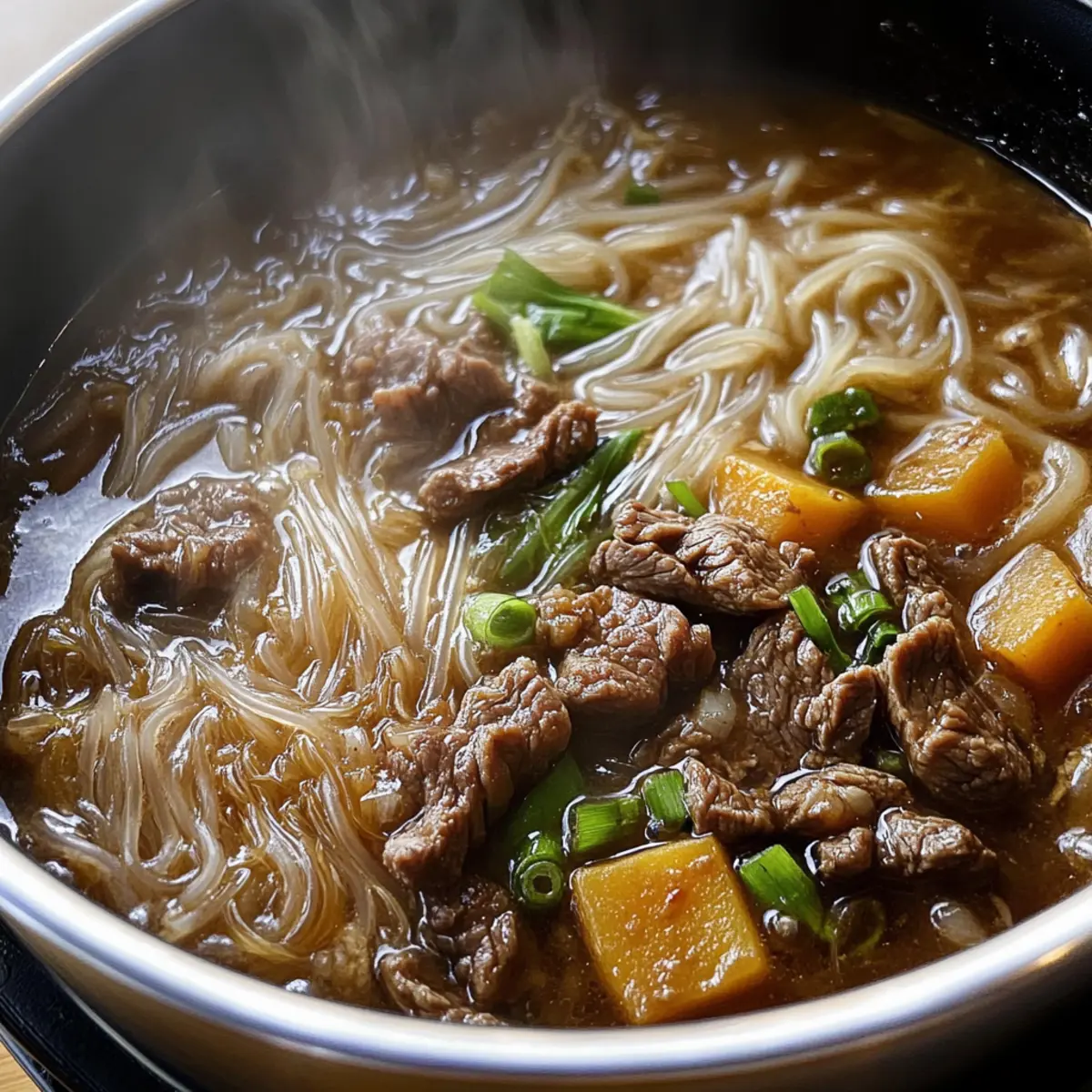
Savory Korean Beef Bulgogi Stew in 30 Minutes Flat
Ingredients
Equipment
Method
- Soak the sweet potato glass noodles in warm water for about 15 minutes until pliable and soft.
- In a medium-sized pot, warm leftover beef bulgogi for about 3-5 minutes, stirring frequently.
- Stir in dark soy sauce and sesame oil until thoroughly mixed, about 1-2 minutes.
- Pour 4 cups of water or beef broth into the pot and bring to a boil for 5-7 minutes.
- Gently add the soaked glass noodles and enoki mushrooms, cooking for 2-3 minutes.
- Ladle the stew into bowls and top with chopped green onions. Serve immediately.
Leave a Reply