
Stepping into my kitchen, the vibrant colors of fresh vegetables and the unique sheen of sweet potato glass noodles always catch my eye. Today, we’re making Japchae, a traditional Korean stir-fried noodle dish that’s as pleasing to the palate as it is to the eyes. With endless possibilities for customization—whether you prefer beef, chicken, or tofu—this gluten-free recipe is perfect for anyone ready to swap out takeout for something homemade. Not only is it quick to prepare, but it also brings a healthy, satisfying meal to your table, ideal for both weeknight dinners and festive gatherings. Curious how to craft this delicious blend of savory and slightly sweet aromas? Let’s dive into making Japchae together!
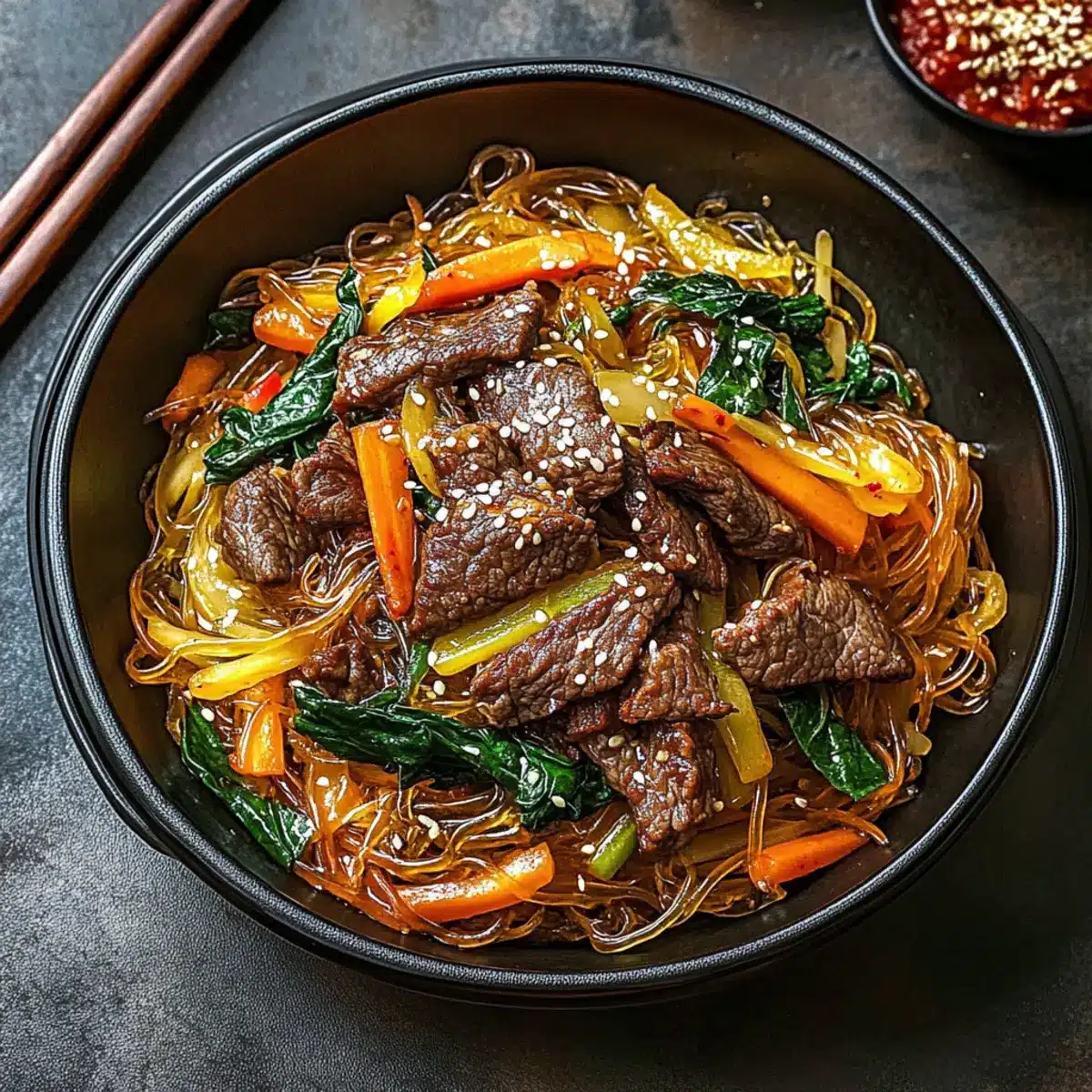
Why Is Japchae So Irresistible?
Vibrant Colors: The mix of colorful vegetables makes every bowl a feast for the eyes, ensuring it looks as good as it tastes.
Quick to Prepare: With just a few simple steps, you can have a delicious dish ready in under 30 minutes!
Endless Customization: Whether you’re a meat lover or prefer plant-based options, you can easily swap out proteins and veggies for your favorite flavors. Enhance with a dash of spice for that extra kick or keep it classic—it’s all up to you!
Nutritious and Gluten-Free: Made with sweet potato noodles, this dish is not only gluten-free but also packed with nutrients, making it a healthy choice for any meal.
Crowd-Pleasing Appeal: Perfect for family dinners or gatherings, Japchae is sure to impress your guests and become a new favorite at potlucks. Ready to embrace the flavors of Korea? Let’s get cooking!
Japchae Ingredients
• Get ready to create magic with these!
For the Noodles
- Sweet Potato Glass Noodles – Provides a unique, chewy texture and absorbs flavors well; a gluten-free alternative that can’t be swapped for regular noodles.
For the Protein
- Beef or Protein of Choice – Adds richness and substance; feel free to use chicken or tofu for a delightful variation.
For the Vegetables
- Mixed Vegetables (carrots, bell peppers, spinach, mushrooms) – Contributes color, nutrition, and balance; substitute seasonal or preferred vegetables to fit your taste.
For the Seasoning
- Soy Sauce – The primary seasoning that adds umami flavor; consider using low-sodium soy sauce for a healthier option.
For the Flavor Boost
- Sesame Oil – Enhances flavor with a nutty aroma; if you don’t have it on hand, olive oil works well too.
For the Garnish
- Green Onions – Adds freshness and a visual appeal; can be swapped with chives if desired.
- Sesame Seeds – Used as a garnish for that extra crunch and flavor; optional, and can be omitted if needed.
Get your ingredients ready, and let’s bring the vibrant flavors of Japchae to life!
Step‑by‑Step Instructions for Japchae
Step 1: Prep the Noodles
Begin by soaking the sweet potato glass noodles in a bowl of hot water for approximately 30 minutes until they soften. Once they’re pliable, drain the noodles and rinse under cold water. Now, heat a large pan or wok over medium heat and stir-fry the soaked noodles for about 5 to 7 minutes, until they are tender and slightly chewy.
Step 2: Cook the Protein
In the same pan, add a splash of oil and increase the heat to medium-high. Add your choice of beef, chicken, or tofu, and stir-fry for about 4 to 6 minutes until the protein is browned and cooked through. Look for a nice sear and ensure it’s cooked completely, then remove the cooked protein from the pan and set aside.
Step 3: Sauté the Vegetables
Next, in the same pan, add the mixed vegetables—like carrots, bell peppers, spinach, and mushrooms. Stir-fry these vibrant vegetables for about 3 to 5 minutes until they soften but still retain a bit of crunch. You’ll want to see bright colors and a slight caramelization as they cook, enhancing the flavors for your Japchae.
Step 4: Combine Ingredients
Once the vegetables are ready, return the cooked protein to the pan alongside the noodles. Drizzle in soy sauce and sesame oil, then gently toss everything together for another 2 to 3 minutes, making sure each ingredient is well-coated. The noodles should glisten beautifully, embracing the savory umami flavors of the dish.
Step 5: Garnish and Serve
Finally, transfer your bubbling Japchae to a serving platter or individual bowls. Top generously with sliced green onions and a sprinkle of sesame seeds for added crunch and visual appeal. Your delicious and colorful Japchae is ready to serve, offering a delightful homemade meal that everyone will love!
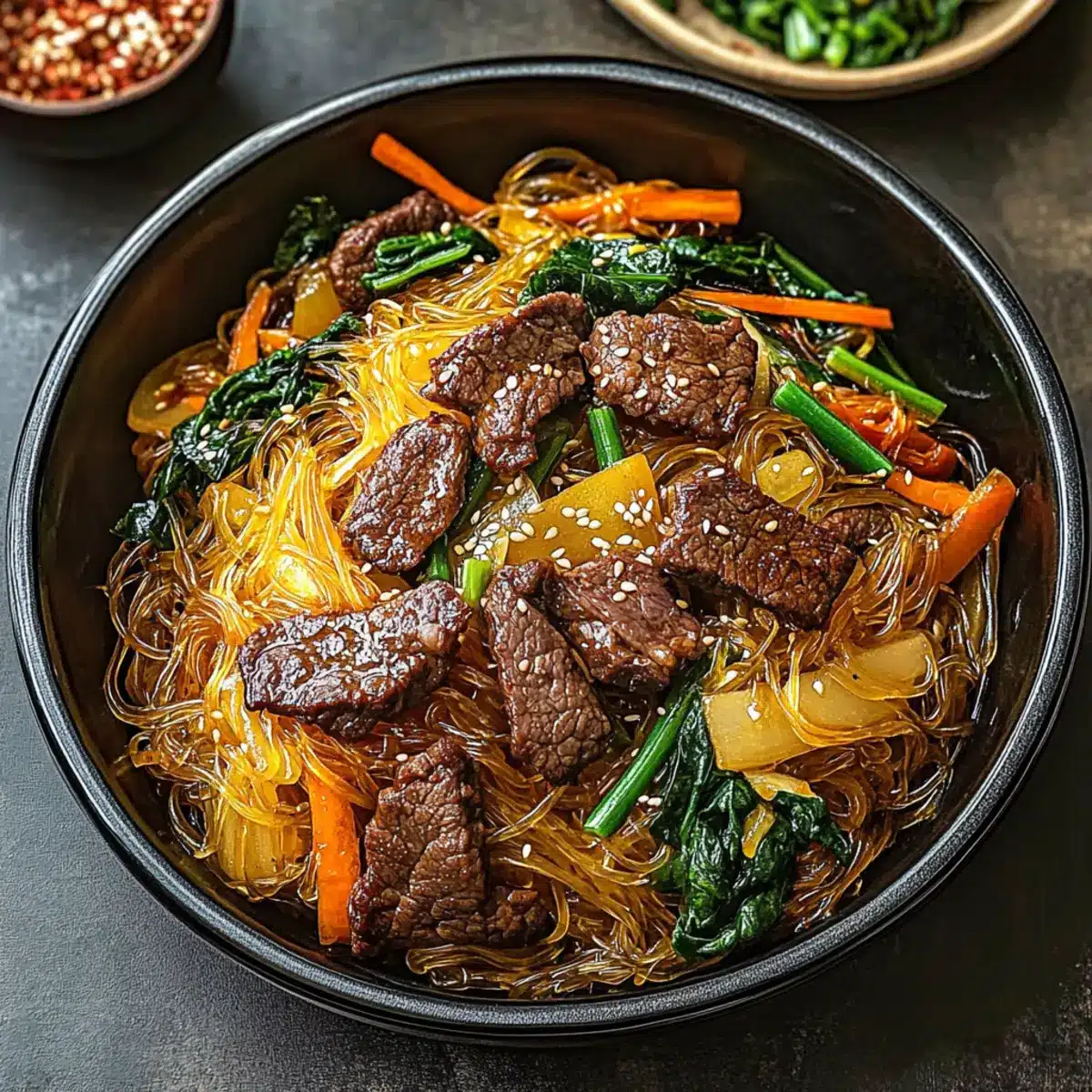
What to Serve with Japchae
Elevate your Japchae experience by pairing it with delightful sides and accompaniments that enhance its vibrant flavors.
- Steamed Rice: The fluffy texture of steamed rice balances the savory and slightly sweet flavors in the Japchae, creating a comforting meal.
- Kimchi: This tangy and spicy side dish introduces a delightful crunch and acidity, making every bite of Japchae even more exciting.
- Cucumber Salad: Refreshing and crisp, this salad adds a zesty contrast to the richness of the noodles, providing a perfect palate cleanser.
- Miso Soup: A warm bowl of miso soup complements the flavors in Japchae while adding a soothing, umami-rich touch to your meal—you can sip and savor!
- Tempura Vegetables: Lightly battered and fried, tempura vegetables offer a crunchy texture that contrasts beautifully with the chewy noodles in the Japchae.
- Sesame Spinach: Sautéed spinach tossed in sesame oil and sesame seeds delivers a nutritious side, enhancing the nutty flavors already present in the main dish.
- Fruit Platter: Fresh seasonal fruits create a light and refreshing end to your meal, balancing out the flavors with their natural sweetness.
- Green Tea: A calming cup of green tea is the perfect beverage to cleanse your palate between bites of the delicious Japchae.
- Mochi Dessert: Finish off your meal with a chewy, sweet mochi to savor the delightful contrast of textures and flavors.
Japchae: Endless Flavor Variations
Feel free to make this delicious Japchae your own by adding your favorite ingredients and flavors!
-
Beef or Chicken: Substitute the beef with grilled chicken for a lighter option, or keep the beef but switch to chicken for a different protein experience.
-
Tofu Twist: Replace the meat with tofu for a hearty, plant-based alternative that soaks up all the lovely flavors.
-
Vegetable Swap: Feel free to use any seasonal vegetables you love; think snap peas or zucchini for a fresh twist.
-
Spicy Kick: Don’t shy away from heat! Add a teaspoon of gochujang or a sprinkle of crushed red pepper flakes for a spicy punch.
-
Vinegar Splash: A dash of rice vinegar can brighten and elevate the flavors, providing a delightful tang to balance the sweetness of the noodles.
-
Nutty Addition: Stir in crushed peanuts or walnuts for added texture and flavor contrast; the crunch will make each bite exciting.
-
Herb Freshness: Try adding fresh herbs like cilantro or basil for an aromatic lift; these herbs can reshape your Japchae into a whole new dish!
For even more culinary inspiration, consider pairing your Japchae with a refreshing cucumber salad or a warm, comforting bowl of miso soup. Embrace the flavors and enjoy the journey of creating a meal that speaks to your heart!
Make Ahead Options
Japchae is a fantastic choice for meal prep, making weeknight dinners a breeze! You can soak the sweet potato noodles and cut the vegetables up to 24 hours in advance, storing them separately in airtight containers in the refrigerator to maintain freshness. The cooked protein can also be made ahead and refrigerated for up to 3 days. When you’re ready to serve your delicious Japchae, simply stir-fry the noodles and vegetables with the protein, add the soy sauce and sesame oil, and sauté everything together for 2-3 minutes. This way, you’ll enjoy a meal that tastes just as delightful as if it were freshly made, saving you time without sacrificing quality!
Expert Tips for the Best Japchae
- Avoid Overcooking: Be careful not to overcook the sweet potato noodles; they should remain chewy to enhance the dish’s texture.
- High Heat is Key: Stir-fry at high heat for the best flavor extraction from all ingredients; this will bring out their natural sweetness.
- Customize Wisely: When swapping proteins or vegetables in your Japchae, keep in mind that cooking times may vary—adjust accordingly for best results.
- Balance the Flavors: Make sure to taste as you go! A balance of umami from the soy sauce and the nuttiness from sesame oil is key for a delicious finish.
- Spice it Up: If you enjoy a bit of heat, feel free to add Korean gochujang or chili flakes to elevate the flavor profile of your Japchae.
How to Store and Freeze Japchae
Fridge: Store leftover Japchae in an airtight container in the refrigerator for up to 3 days. Make sure it’s cooled to room temperature before sealing.
Freezer: If you want to keep it longer, freeze Japchae for up to 2 months. Use freezer-safe containers or bags to prevent freezer burn.
Reheating: To reheat, thaw in the fridge overnight, then warm gently in a skillet over low heat. Add a splash of water or soy sauce to bring back its moisture and avoid overcooking.
Fresh is Best: While Japchae can be stored, it’s best enjoyed fresh to maintain the delightful chewiness of the sweet potato noodles.
Japchae Recipe FAQs
What type of sweet potato noodles should I use for Japchae?
You should use authentic Korean sweet potato glass noodles, often labeled as “dangmyeon.” These noodles provide a unique chewy texture and absorb flavors beautifully. Unfortunately, regular noodles cannot be substituted in this recipe, so be sure to seek out the right kind!
How long can I store leftovers of Japchae?
Leftover Japchae can be kept in an airtight container in the refrigerator for up to 3 days. It’s best to allow it to cool to room temperature before sealing, so it retains its texture. When ready to enjoy, gently reheat it in a pan over low heat, adding a splash of water or soy sauce to maintain moisture.
Can I freeze Japchae? How do I do it?
Absolutely! To freeze, let your Japchae cool completely and then transfer it to a freezer-safe container or bag, removing as much air as possible. It can be stored in the freezer for up to 2 months. When you’re ready to enjoy it, thaw it overnight in the refrigerator. Then, warm it up gently in a skillet with a bit of water or soy sauce to regain its original texture.
What can I do if my noodles get overcooked?
If your sweet potato noodles become overcooked and lose their chewy texture, there’s a little adjustment you can make! While you may not completely fix them, you can try adding a dash of soy sauce and a splash of sesame oil while gently reheating them in a pan. This can add flavor and help somewhat revive their appeal, but it’s always best to keep a close eye on them during the cooking process to avoid this situation.
Are there any dietary concerns with Japchae?
Japchae is a fantastic gluten-free option due to the use of sweet potato noodles, making it ideal for those with gluten sensitivities. If you’re cooking for others, be sure to check whether anyone has allergies to key ingredients, like soy (in soy sauce) or sesame seeds, as these can be common allergens. In such cases, consider using alternatives like tamari for a gluten-free soy sauce or leave out the sesame seeds completely.
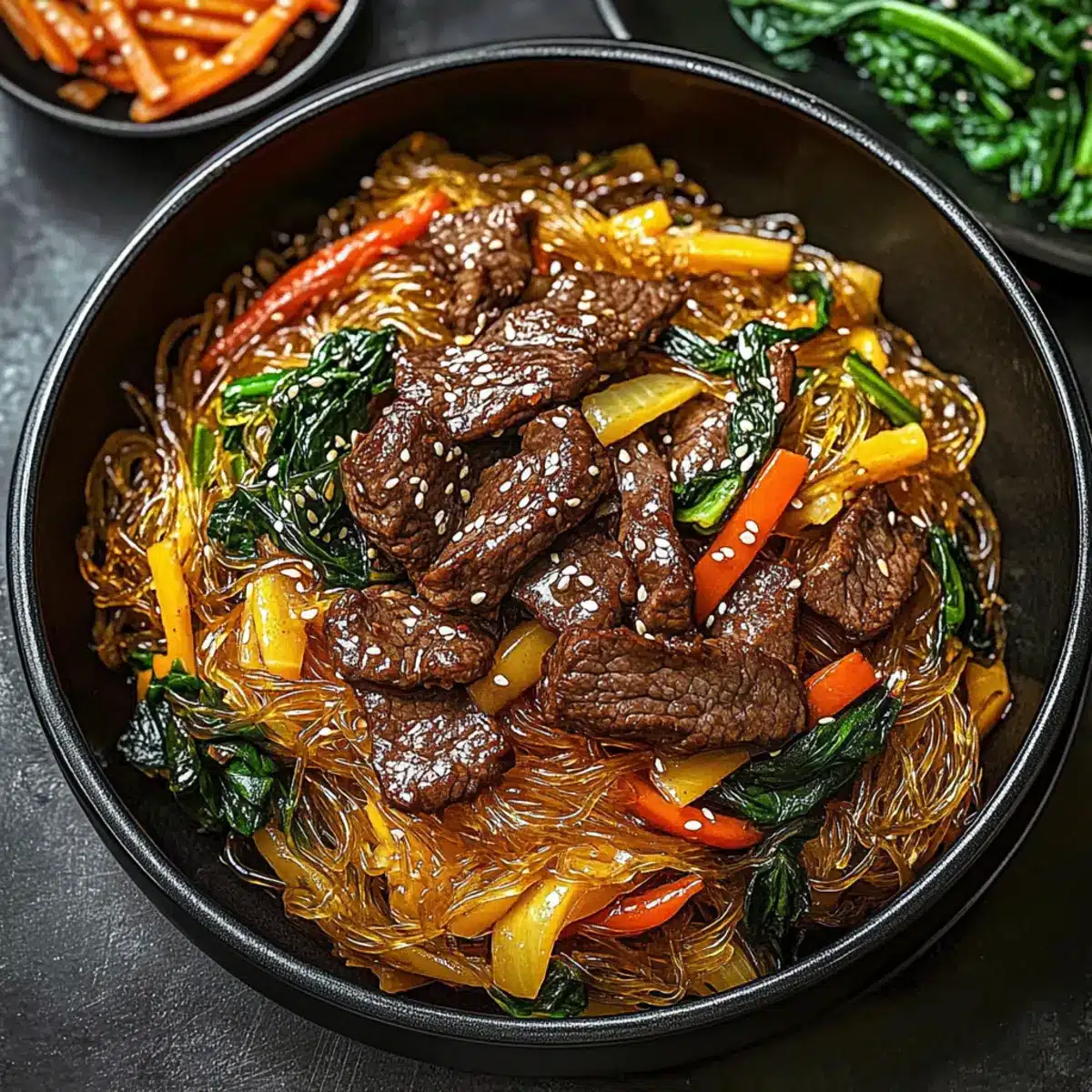
Japchae Delight: Easy, Customizable Korean Glass Noodles
Ingredients
Equipment
Method
- Soak the sweet potato glass noodles in hot water for approximately 30 minutes until they soften, then drain and rinse under cold water.
- Heat a large pan over medium heat, stir-fry the soaked noodles for about 5 to 7 minutes until tender.
- In the same pan, add oil and increase heat to medium-high, then cook your choice of meat for about 4 to 6 minutes.
- Add mixed vegetables to the pan and stir-fry for about 3 to 5 minutes until softened.
- Return the cooked protein to the pan with the noodles, add soy sauce and sesame oil, and toss together for 2 to 3 minutes.
- Transfer to a serving platter or bowls and garnish with green onions and sesame seeds.
Leave a Reply