
As the vibrant colors of the vegetables danced around in my skillet, I couldn’t help but think how perfect this moment was for cooking something special. Japchae, the traditional Korean dish of stir-fried sweet potato noodles, brings an irresistible combination of chewy texture and savory flavors that warms the heart and satisfies cravings. What I love most about this recipe is how quick it comes together, making it an ideal choice for busy weeknights or cozy family dinners. Plus, it’s wonderfully customizable—swap in your favorite proteins like chicken or tofu, or adjust the spice level with a little gochujang if you’re feeling adventurous. Are you ready to dive into the delicious world of Japchae? Let’s get started!
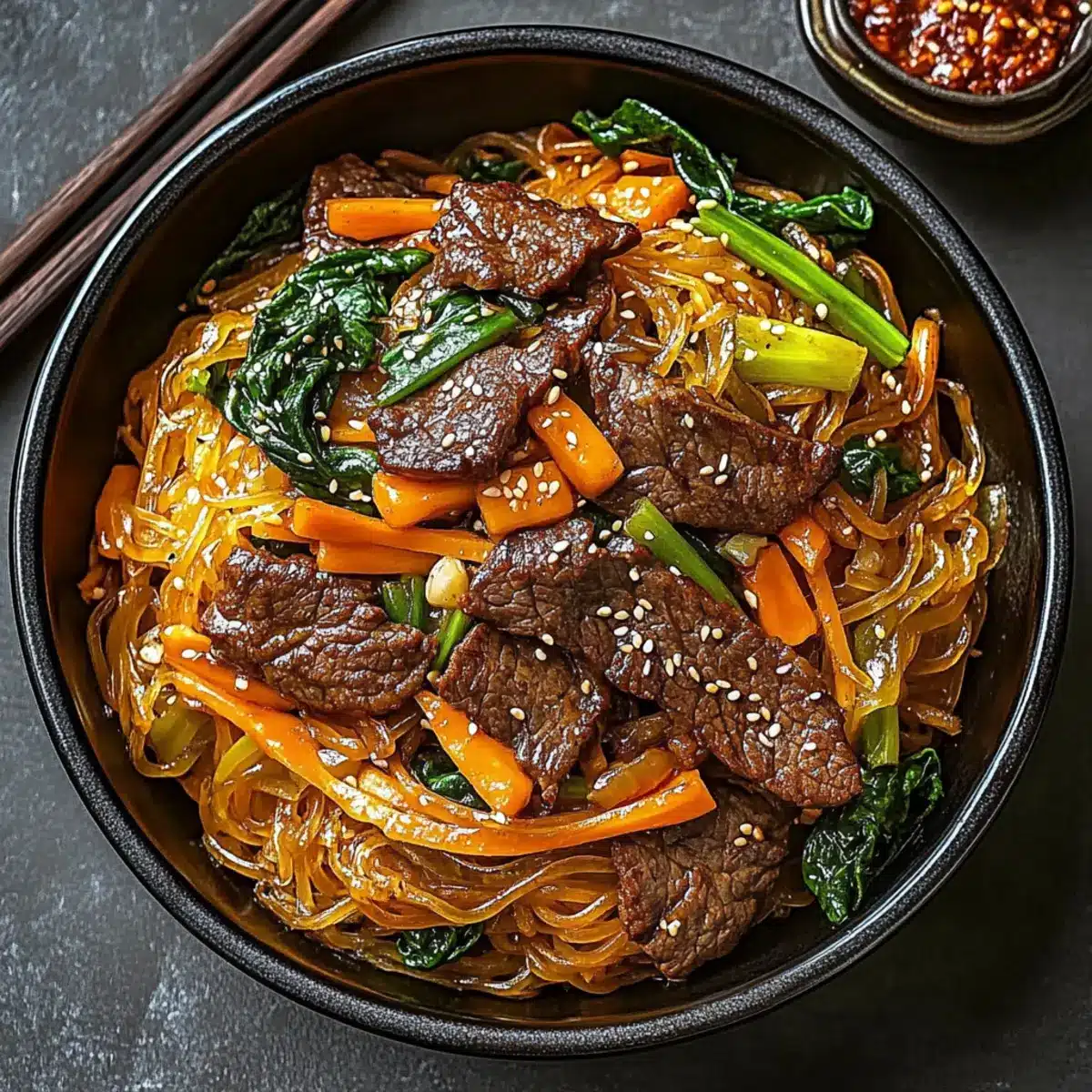
Why is Japchae a Must-Try Dish?
Versatile Ingredients: You can easily tailor Japchae to suit your tastes! Quick Preparation: Ready in under 30 minutes, it’s perfect for busy nights. Flavorful Experience: The delightful mix of sweet, savory, and umami flavors will leave everyone craving more. Health-Conscious Option: With gluten-free sweet potato noodles and a medley of veggies, it’s a nutritious choice. Crowd-Pleaser: Ideal for family dinners or entertaining, it’s sure to impress! For more delicious ideas, try pairing it with some homemade kimchi or serving it alongside bulgogi.
Japchae Ingredients
• For an unforgettable dish, gather these essentials to create your perfect Japchae!
For the Noodles
- Sweet Potato Glass Noodles (Dangmyeon) – These noodles provide a unique chewy texture that makes Japchae truly special; they’re naturally gluten-free.
For the Protein
- Beef – Adds rich flavor and protein; choose tender cuts like sirloin for the best results.
- Chicken or Tofu – Perfect alternatives that work beautifully in this dish; grill or sauté beforehand for extra flavor.
For the Vegetables
- Carrots – Sliced thinly, they add color and sweetness to the dish.
- Bell Peppers – Use a mix of colors for a vibrant presentation and crunch.
- Spinach – This leafy green wilts quickly and offers a nutritious boost.
- Onions – Dice them to add flavor base and depth to your stir-fry; shallots work well too!
For Flavoring
- Soy Sauce – Provides depth and umami; for a gluten-free option, switch to tamari.
- Sesame Oil – Infuses everything with a nutty aroma; don’t skip this for authentic taste!
For Garnish
- Green Onions – Slice them thinly to add a fresh pop to your Japchae; chives are a great substitute if needed.
- Sesame Seeds – Optional, but they add a nice crunch; toss them on before serving for extra flair.
Prepare these ingredients to create an unforgettable Japchae experience that you and your loved ones will cherish!
Step‑by‑Step Instructions for Japchae
Step 1: Prepare Noodles
Start by soaking the sweet potato glass noodles in a large bowl of hot water for 20-30 minutes, or until they become soft and pliable. This will ensure they cook evenly and achieve their signature chewy texture. Once softened, drain the noodles and set them aside to prevent sticking.
Step 2: Cook Beef
In a large skillet or wok, heat a tablespoon of oil over medium-high heat. Add the beef strips and stir-fry for about 5-7 minutes, until they are browned and cooked through. Make sure to keep stirring to avoid burning. Once cooked, remove the beef from the skillet and set it aside on a plate.
Step 3: Sauté Vegetables
Utilizing the same skillet, add another drizzle of oil if needed and toss in sliced onions, carrots, and bell peppers. Stir-fry these vegetables for about 3-4 minutes, until they begin to soften but still retain some crunch. Add the spinach during the last minute, allowing it to wilt gently for added freshness.
Step 4: Combine Ingredients
Return the drained sweet potato noodles and cooked beef to the skillet with the sautéed vegetables. Drizzle with soy sauce and sesame oil, mixing everything well to coat the noodles and beef evenly with the beautiful savory flavors. Stir-fry for an additional 2-3 minutes until everything is heated through.
Step 5: Garnish and Serve
Remove the skillet from heat and transfer the Japchae to a serving dish. Sprinkle sliced green onions over the top for a fresh pop and optional sesame seeds to add crunch. Serve immediately, enjoying the vibrant colors and delicious aroma of this classic Korean dish!
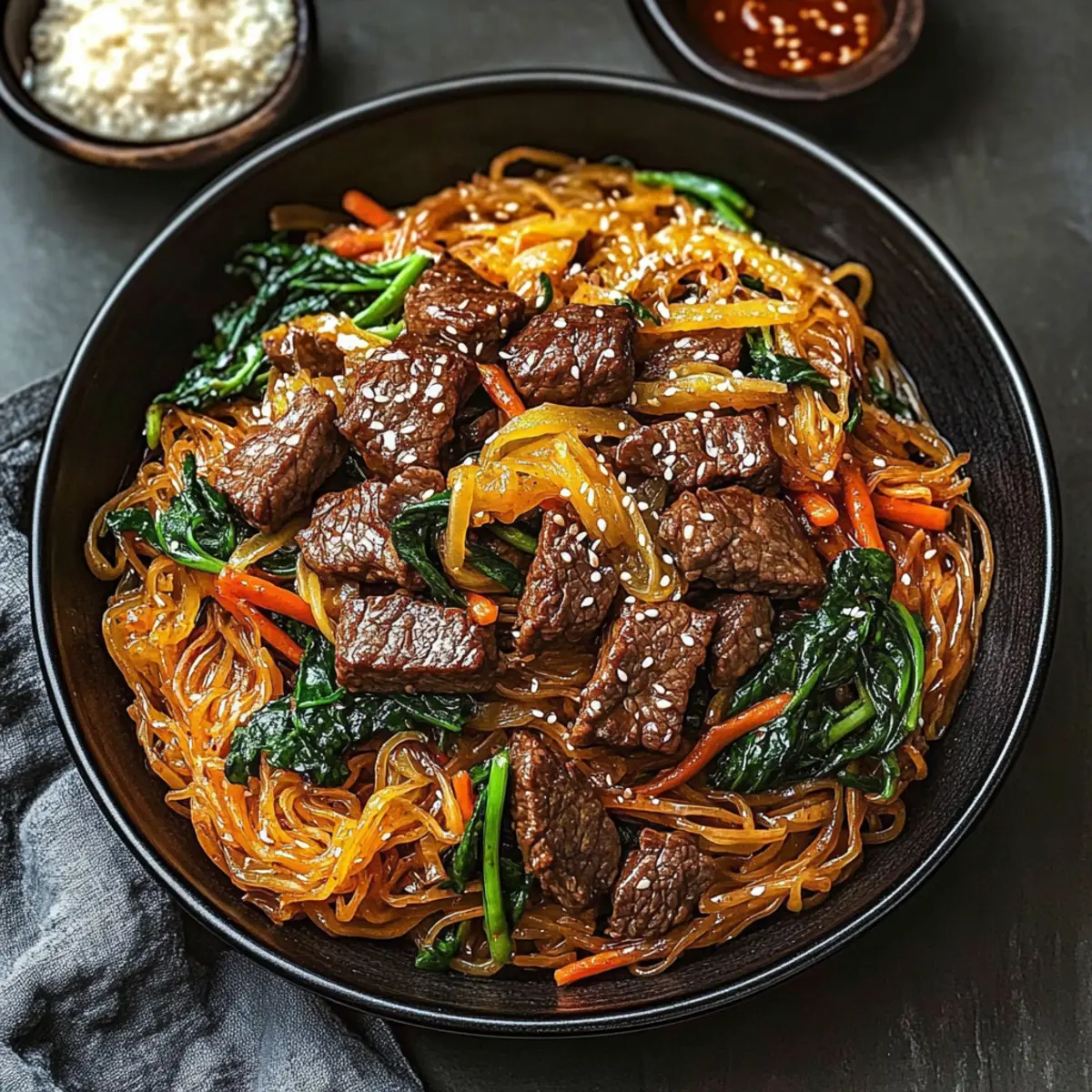
How to Store and Freeze Japchae
Fridge: Store leftover Japchae in an airtight container in the refrigerator for up to 3 days. When ready to eat, reheat it in a skillet over medium heat, adding a splash of water to revive its texture.
Freezer: To freeze, portion out the Japchae into freezer-safe containers, making sure to remove as much air as possible. It can be frozen for up to 2 months; just thaw in the fridge overnight before reheating.
Reheating: For best results, reheat in a non-stick skillet on medium heat, stirring occasionally until warmed through. Add a little soy sauce or water to help restore moisture.
Room Temperature: If serving warm, keep Japchae at room temperature for no longer than 2 hours to ensure food safety.
Expert Tips for Perfect Japchae
-
Noodle Soaking: Ensure the sweet potato noodles are soaked in hot water long enough to become soft, enhancing the dish’s chewy texture.
-
High Heat Cooking: Always stir-fry your ingredients over high heat to keep vegetables crisp and vibrant, avoiding a soggy texture in your Japchae.
-
Quick Stir-Fry: Don’t overcrowd the skillet; cook in batches if necessary. This allows even cooking and prevents steaming, preserving the dish’s flavors.
-
Adjust the Spice: If you’re adding gochujang, start with a teaspoon and gradually increase to suit your heat preference, tasting as you go to prevent overwhelming spiciness.
-
Flavor Boosters: For an extra layer of depth, consider adding a splash of mirin or rice vinegar alongside the soy sauce for a slightly sweet zing.
Make Ahead Options
Preparing Japchae ahead of time is a fantastic way to save precious minutes on busy weeknights! You can soak the sweet potato glass noodles up to 24 hours in advance; simply drain and refrigerate them in an airtight container. Additionally, you can stir-fry your choice of protein and vegetables and store them together for up to 3 days. To maintain the wonderful quality of your Japchae, be sure to store everything separately until you’re ready to serve. When it’s time to enjoy, simply reheat the noodles and protein mixture in a hot skillet, add your sautéed veggies, toss them with soy sauce and sesame oil, and you’ll have a delicious meal on the table in no time!
Japchae: Creative Variations Await!
Feel free to let your culinary imagination soar with these delightful twists on Japchae!
- Protein Choices: Substitute beef with grilled chicken, shrimp, or tofu for a different protein punch. Each option brings its unique flavor, enhancing the overall dish.
- Spice It Up: Add sliced red chili or a spoonful of gochujang for a spicy kick. The contrast of heat against the sweet noodles creates an exhilarating flavor experience.
- Veggie Boost: Toss in extra vegetables like mushrooms, zucchini, or even broccoli for added nutrition and color. Each vegetable enhances the freshness, making the dish even more vibrant.
- Noodle Swap: If sweet potato noodles aren’t your thing, try other gluten-free options like rice vermicelli. Just keep in mind that the texture will vary, but you’ll still enjoy a hearty meal!
- Sweet Touch: Drizzle in a bit of honey or a sprinkle of brown sugar to enhance the natural sweetness of the dish, making it even more comforting.
- Nutty Flavor: Substitute sesame oil with a splash of peanut or almond oil for a nutty profile. This twist will add an unexpected depth of flavor that’s quite enticing.
- Umami Burst: Consider adding shiitake mushrooms or a splash of fish sauce for an umami boost. These ingredients deepen the savory base and elevate the dish substantially.
- Fresh Herbs: Garnish your Japchae with fresh cilantro or mint, offering an herbaceous brightness that beautifully complements the savory noodle stir-fry.
Explore these variations to craft your perfect Japchae, ensuring every bite is as exciting as the last. And if you’re feeling inspired to complete your Korean meal, don’t forget to try serving it alongside homemade kimchi or a classic bulgogi for the ultimate dining experience!
What to Serve with Authentic Japchae?
Imagine your family gathered around the table, savoring a medley of textures and flavors as you complement your Japchae with these enticing sides.
- Kimchi: This traditional fermented side dish adds a spicy kick and a lovely tang that pairs perfectly with the savory flavors of Japchae.
- Cucumber Salad: Refreshing and crunchy, a light cucumber salad balances the rich, hearty components of the stir-fry, offering a palate-cleansing bite.
- Bibimbap: A colorful bowl of bibimbap complements Japchae beautifully, bringing together various vegetables, rice, and an egg for a more substantial meal.
- Bulgogi: Sweet and savory marinated beef enhances the meal experience, providing a tender and flavorful protein that harmonizes well with Japchae.
- Steamed Rice: A fragrant bowl of steamed rice serves as the perfect neutral base, allowing the flavors of Japchae to shine even brighter, making every bite delightful.
- Sesame Spinach: This dish brings a nutty flavor and vibrant color to your table. Lightly seasoned with sesame oil, it adds just the right touch of greenery next to your noodles.
- Korean Fried Chicken: Crispy and tender, this indulgent side brings extra joy to any meal. The amazing crunch of fried chicken pairs perfectly with the chewy noodles.
- Sojunggwa (Korean Cinnamon Punch): For a refreshing drink, this sweet and subtly spicy beverage offers a floral finish that enhances the overall dining experience.
- Fruit Dessert: End your meal on a light note with a platter of seasonal fruits. Something sweet like watermelon or grapes will cleanse your palate beautifully after the savory delight of Japchae.
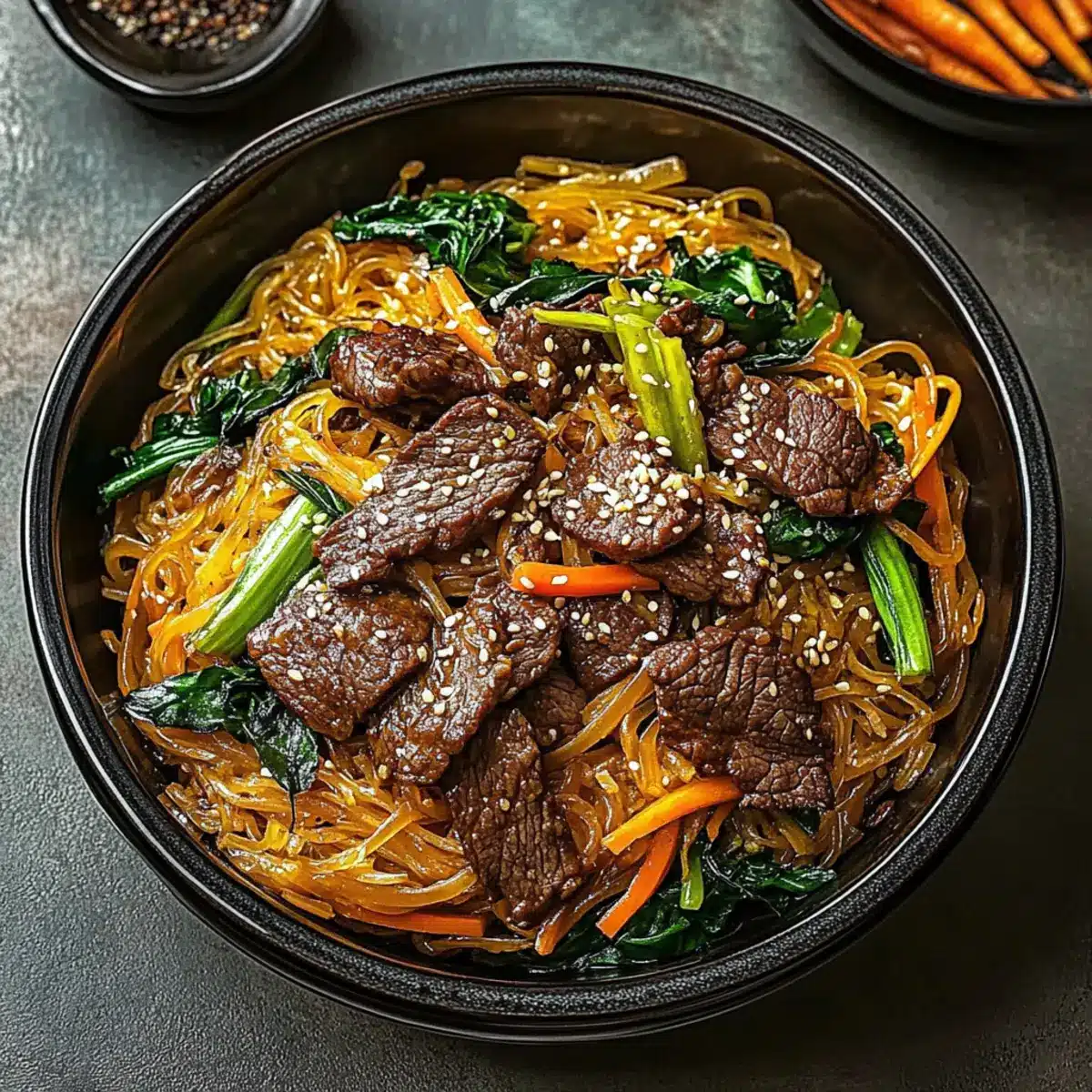
Japchae (Korean Stir-Fried Sweet Potato Noodles) Recipe FAQs
How do I choose the right sweet potato glass noodles for Japchae?
Absolutely! When selecting sweet potato glass noodles (Dangmyeon), look for packages that specifically state “sweet potato” on the label. They should be clear and somewhat elastic in appearance. If you notice any dark spots or a dusty texture, reconsider your choice as those may indicate age or quality issues.
What’s the best way to store leftover Japchae?
Very! To keep your leftover Japchae fresh, simply transfer it into an airtight container and refrigerate it. It will stay good for up to 3 days. When you’re ready to enjoy it again, reheat in a skillet over medium heat to restore its lovely texture. If you find it’s a bit dry, add a splash of water or soy sauce!
Can I freeze Japchae for later use?
Absolutely! To freeze your delicious Japchae, portion it into freezer-safe containers, ensuring you press out as much air as possible. It can be frozen for up to 2 months. When you’re ready to eat, thaw it in the refrigerator overnight. Once thawed, reheat it in a skillet on medium heat, adding a bit of water or soy sauce to bring it back to life.
What should I do if my Japchae turns out soggy?
Oh no! If your Japchae ends up soggy, it’s usually due to overcooked noodles or too much moisture. To fix this, first ensure your noodles were well-drained after soaking. If you find the dish is already cooked, try sautéing it in a hot, dry skillet for a few minutes. This will help evaporate excess moisture and restore some texture.
Are there any dietary concerns with Japchae?
Very! If you’re cooking for someone with dietary restrictions, be sure to check the ingredients in your soy sauce, as some brands may contain gluten. You can easily opt for tamari, which is gluten-free. Additionally, those with allergies to sesame should substitute the sesame oil with canola oil and omit sesame seeds. Always let your guests know what ingredients are in the dish to ensure a safe and enjoyable meal!
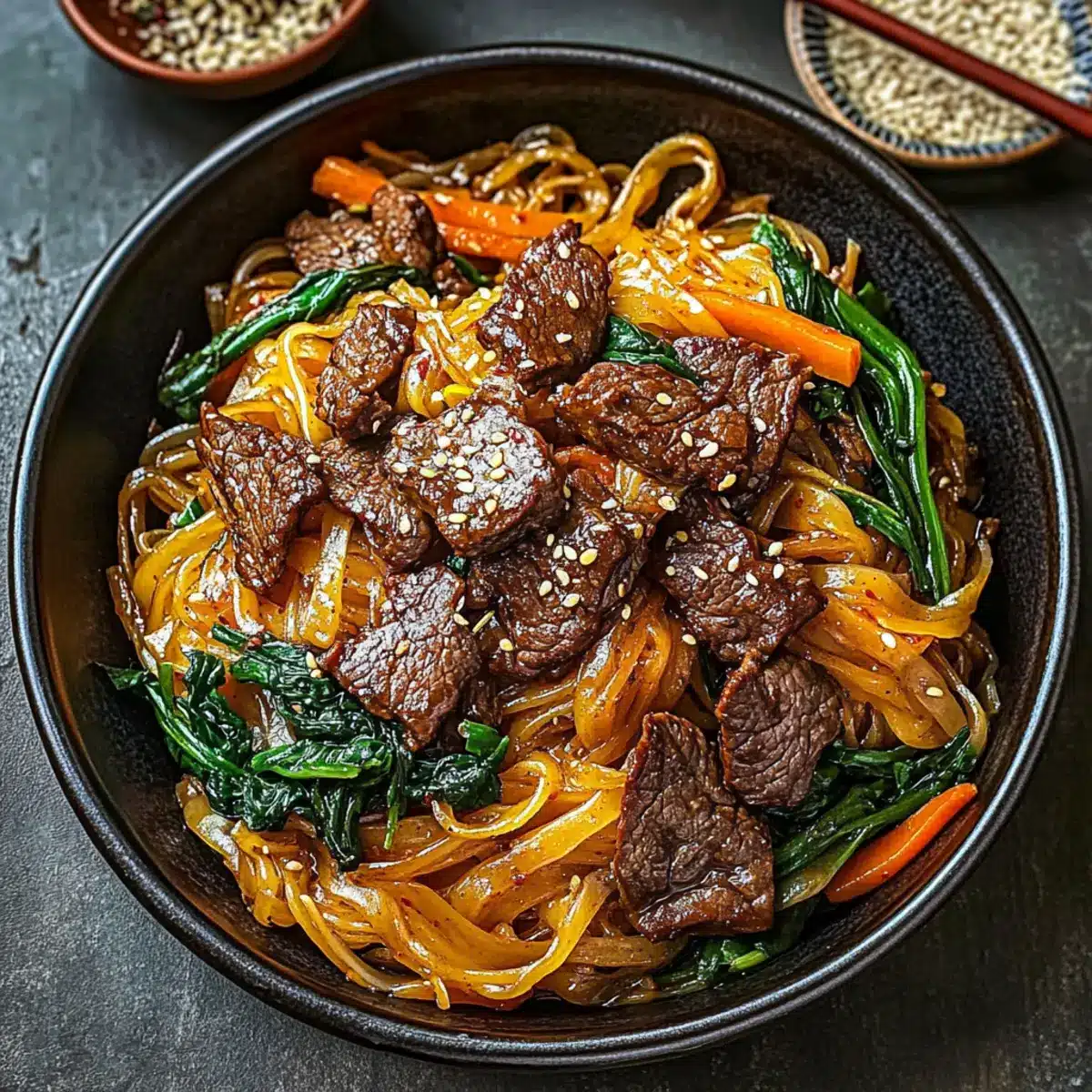
Delicious Japchae: Sweet Potato Noodles You'll Love to Share
Ingredients
Equipment
Method
- Soak the sweet potato glass noodles in hot water for 20-30 minutes until soft. Drain and set aside.
- Heat oil in a skillet over medium-high heat. Stir-fry beef for 5-7 minutes until browned. Remove and set aside.
- Add more oil if needed, then stir-fry onions, carrots, and bell peppers for 3-4 minutes. Add spinach last minute.
- Combine drained noodles and cooked beef with the sautéed vegetables. Drizzle with soy sauce and sesame oil, stir-frying for 2-3 minutes.
- Transfer to a serving dish, garnish with green onions and sesame seeds, and serve immediately.
Leave a Reply